
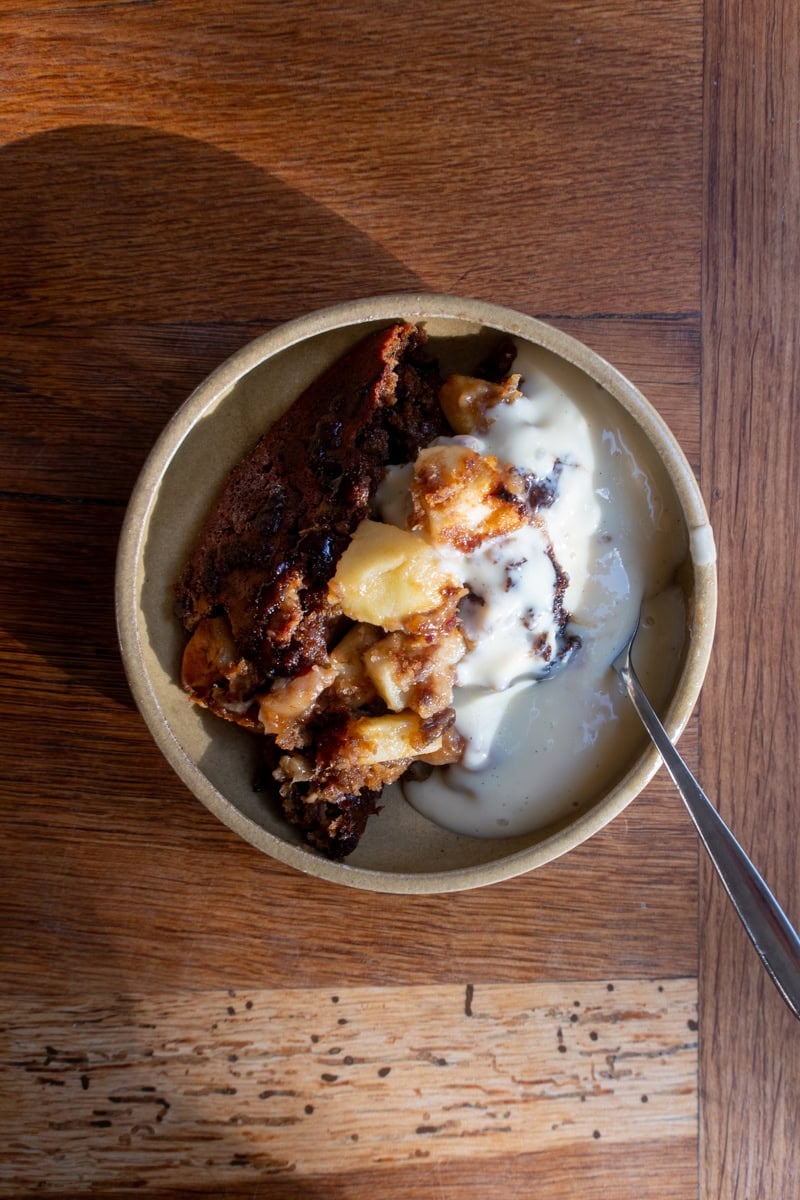
James, my fiancé, has two favourite puddings: apple crumble and sticky toffee pudding. Great choices, I know.
I’ve thought about combining them for a while, but I have been a little nervous – two great things don’t always make something greater. Sometimes 2+2 doesn’t = 4.
But then the first proper chill of autumn arrived, I put a woolly jumper on, and it suddenly it felt like the right time to try. The sponge is based on a traditional sticky toffee pudding, with dates, dark muscovado sugar and black treacle, but it bakes over a layer of tart Bramley apples.
That alone would make a perfectly good pudding, but a sticky toffee pudding needs sauce. Rather than making one separately, this is a self-saucing pudding. You pour a mixture of apple juice and cornflour over the uncooked batter, which will have you worried for a while – it looks like a complete mess. But as it bakes, it sinks underneath the sponge and thickens into a proper sauce.
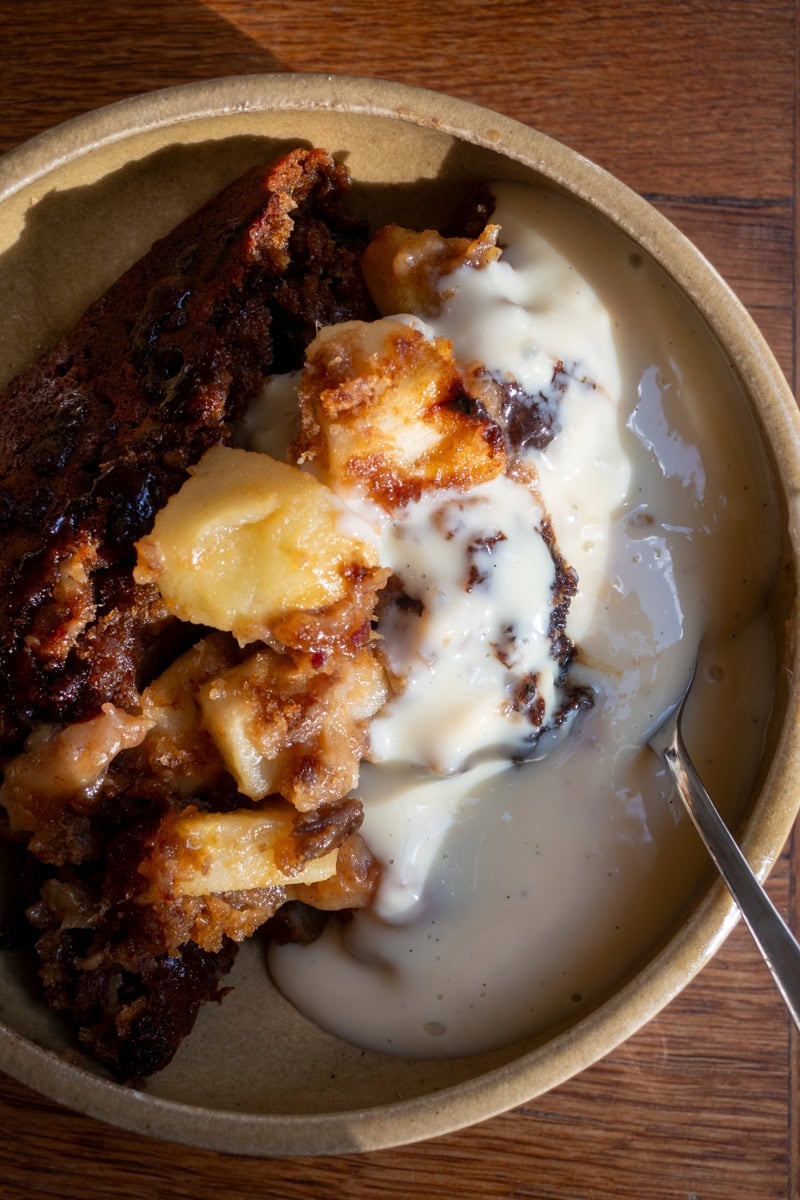
The result is the best bits of both puddings in one bowl. Soft sticky sponge, tart apples and plenty of warm apple sauce, with a little crunch from the sugar on top. Add custard, and you have a very happy James. And a very happy me, too.
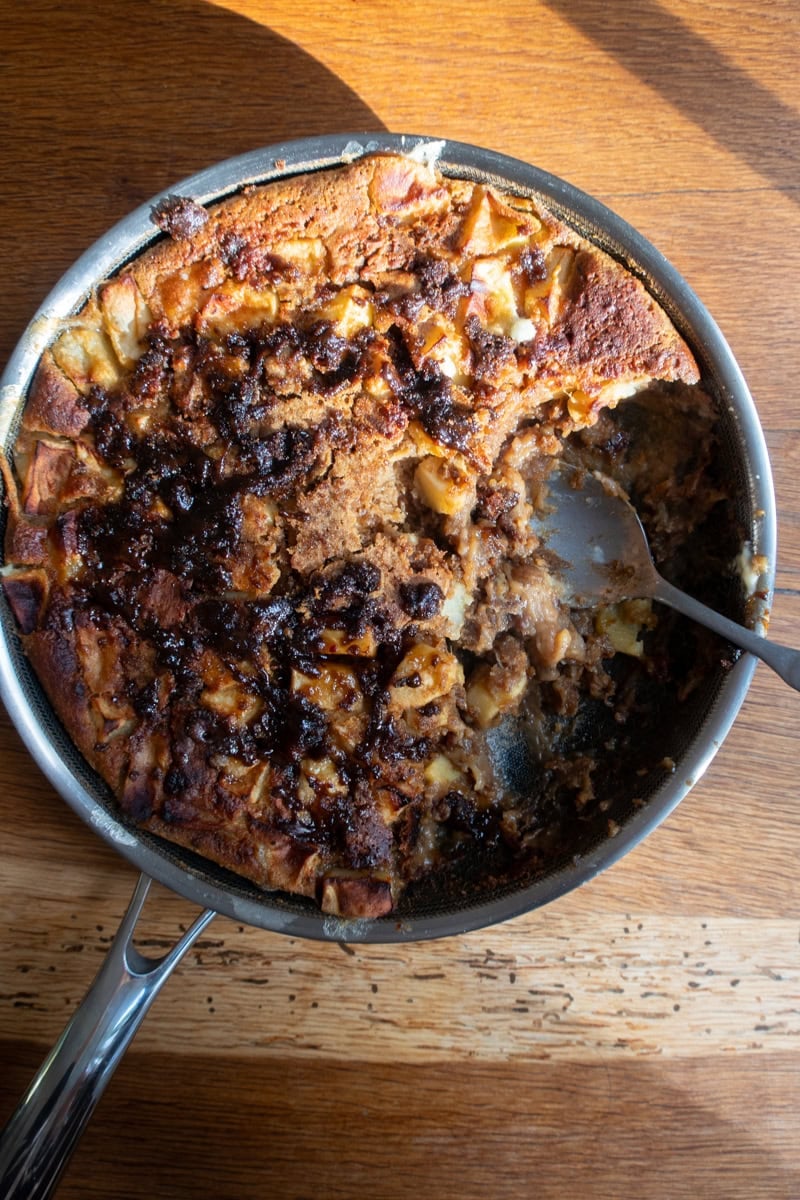
This sticky toffee apple pud is particularly good eaten warm, when the sauce is still runny, and the custard starts to mingle with it. Make sure you spoon right down to the bottom of the dish so you get a bit of everything in every mouthful.
It’s one to eat straight away; it isn’t the best for reheating – just to let you know!
SELF-SAUCING STICKY TOFFEE APPLE PUDDING
Two favourite puddings, one very good idea. Apple crumble and sticky toffee are a beautiful match! Especially when there’s custard involved.
Ingredients
- 200 g dried pitted dates finely chopped
- 1 tsp bicarbonate of soda
- 2 large Bramley apples
- 75 g unsalted butter softened
- 2 tbsp black treacle
- 110 g dark muscovado sugar
- pinch of salt
- 2 large eggs at room temperature
- 150 g plain flour
- 2 tsp baking powder
- 400 ml fresh apple juice (proper stuff, not the one from concentrate)
- 25 g cornflour
- to serve: custard
Instructions
-
Preheat the oven to 160°c (fan-assisted).
-
Combine the chopped dates, 200ml of just-boiled water, and the bicarbonate of soda in a jug and stir well. Set aside for for 10 minutes, to soften the dates.
-
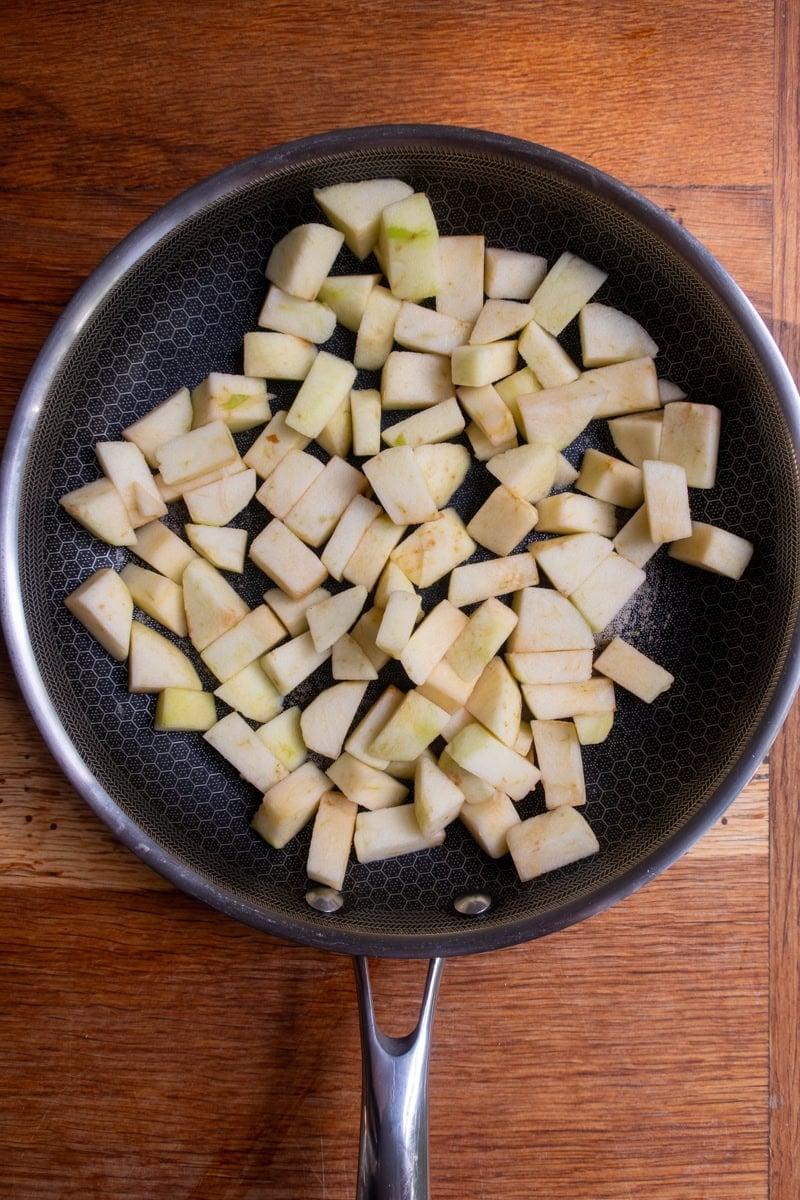
Meanwhile you can peel, core and chop the apples into rough 2cm chunks. Place them into a 9-10 inch round ovenproof dish (do not use one with a detachable base!), and shimmy them into an even layer. You should have enough to cover the bottom, but without too much overlap (you can add another half apple here, if your dish is looking sparse).
-
Next, cream the butter, treacle, 50g of the dark muscovado sugar and a pinch of salt in a mixing bowl for a few minutes, until creamy and lighter in colour. Add the eggs one at a time, beating between, to incorporate them.
-
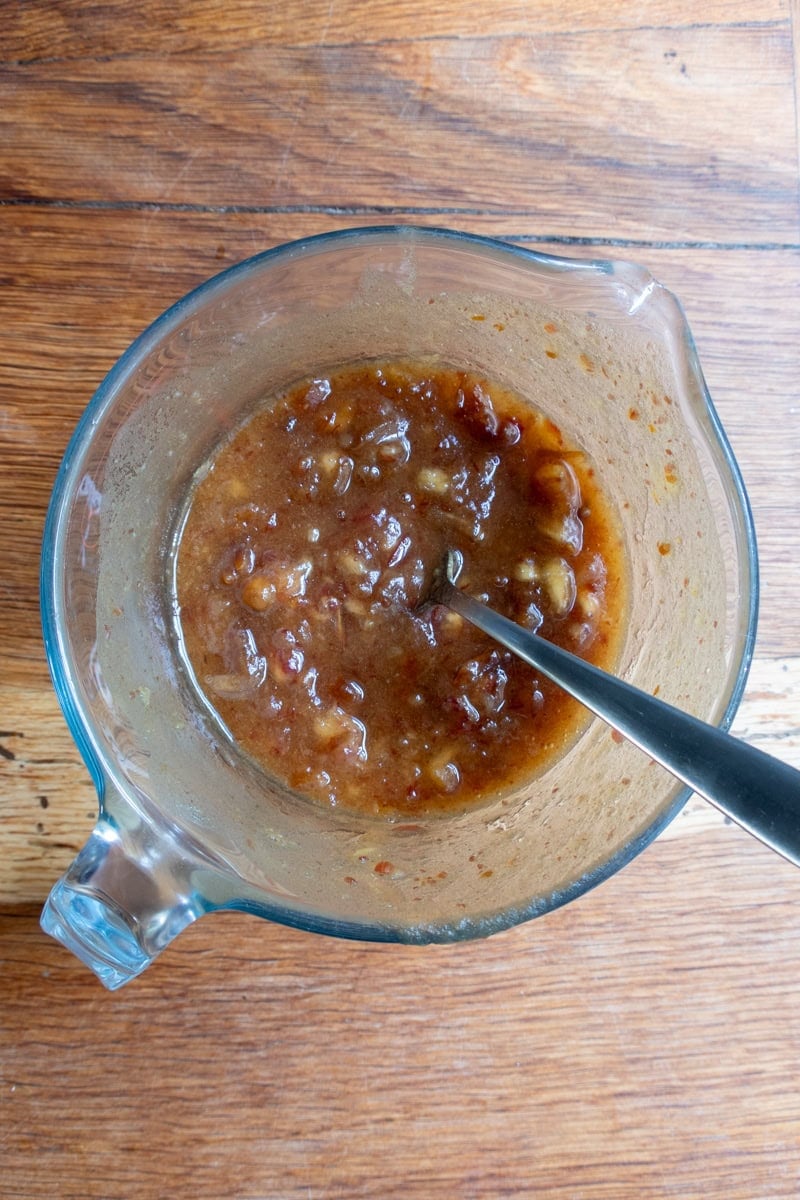
Use a fork to squish the dates and their liquid into a rough paste, then stir the lot through the batter. Sift in the flour and baking powder, and gently fold it through. Spoon the batter into your dish, on top of the apples, then sprinkle over the remaining dark muscovado sugar.
-
Warm the apple juice in a saucepan, until comes to a gentle simmer. Place the cornflour into a jug, and whisk ferociously as you pour the warm apple juice overtop, until completley smooth.
-
Place your baking dish onto a baking tray, then pour the apple juice mixture evenly all over the dish, on top of the batter (it will look like a right mess, but trust the process!). Bake for 32-38 minutes or until the cake looks risen and a skewer inserted into the middle (just into the cake part!), comes out clean. Let the pudding sit for 5 minutes, before spooning into bowls and serving with custard.
Loads more puddings here for you!

The bit about pouring apple juice and cornflour over the raw batter and it looking like a mess is reassuring, since that stage usually makes me second-guess myself. One practical check: before pouring that liquid over, spoon it gently around the edges rather than straight onto the center, so the sponge layer stays intact and the sauce sinks evenly. Also worth testing with a skewer slightly off-center at the end, since the middle stays wet from the sauce and can read as underbaked.